
How To Plan Your First Family Interrail Adventure
Last Updated on: 24th March 2026, 12:30 pm
Family Interrail Trips
There’s something undeniably romantic about the idea of exploring Europe by train and watching landscapes shift from mountains to coastlines, stepping off in new cities, and doing it all at a relaxed, family-friendly pace. A family Interrail adventure can deliver exactly that. But when you’re travelling with children, a bit of thoughtful planning goes a long way in turning a good trip into a great one.
One thing that I love about taking an interrail trip is that you go from city centre to city centre. When you fly, the airports tend to be out of the city centres. Sometimes an airport is an hour or two from the city centre. The other thing is that you don’t have to worry about the size of luggage!
Start With A Realistic Itinerary
One of the most common mistakes first-time Interrailers make is trying to see too much in a short time. While it’s tempting to tick off as many countries as possible, this approach can quickly become tiring, especially for kids. Instead, focus on fewer destinations and give yourself enough time to enjoy each one. It isn’t about quantity; it is the quality of your trip. Although a good rule of thumb is to spend at least two or three nights in each place, sometimes you do just need to travel through one country and miss it out. A good example of this is when we travelled from London to Stockholm. We were short on time and literally just took high-speed trains with half hour changes at stations. We had to do it this way to reach the end goal and get to the sleeper train in Hamburg on time. Stopping in some destinations for 2 or 3 days his gives everyone a chance to settle in, explore at a comfortable pace, and avoid the constant cycle of packing and unpacking.
Think about travel times, too. Long journeys may sound scenic in theory, but younger travellers often struggle with sitting still for hours. Aim to keep most train journeys under four or five hours where possible, or break longer routes into manageable segments. When Tilly was 6, and we interrailed, we never did a trip over 4 hours. This worked so well for us.
Understand How The Pass Works For Your Family Interrail Trip
The Interrail Pass offers flexibility, but it’s not quite as simple as hopping on any train at any time. While many regional trains don’t require reservations, high-speed and overnight services often do. These come with additional fees and need to be booked in advance. During busy seasons, reservations can sell out, so it’s wise to plan and book key routes in advance. We have found in Germany that it’s always a good idea to book seats, especially in First class. These usually cost 6 euros. However, the trains in Germany often run late, and you may lose your reservation. So it is hard to know what to do for the best. Take some time before your trip to familiarise yourself with how travel days work and how to log journeys. It might feel a bit technical at first, but once you get the hang of it, it becomes second nature.
Choose Family-Friendly Routes
Not all routes are ideal for travelling with children, for example, do you want to be on a train from Vienna to Bucharest for 15 hours or more with your child? Some countries are particularly easy to navigate, offering reliable services and short distances between major cities, along with plenty to see along the way. Scenic regions with frequent trains and simple connections can make the experience far more enjoyable.
Equally important is balancing the big cities with some quieter stops and smaller towns and villages. While major capitals offer iconic sights, smaller towns or nature-focused destinations often provide space for kids to run around and recharge. You also see more authentic places in the country you are visiting if you choose to visit smaller towns and villages.

Pack light (really light) For Your Family Interrail Trip
Packing is where many families overcomplicate things. Remember, you’ll be carrying your luggage onto trains, through stations, and possibly up stairs or across platforms. Keeping bags compact and manageable makes a huge difference. Opt for one hand luggae sized suitcase per adult and a small backpack for each child. Or opt for 40-litre backpacks for the adults and smaller ones for the kids. Include essentials like snacks, reusable water bottles, wipes, and a change of clothes for younger kids. It’s also worth packing a small “train kit” with entertainment, think about putting in some colouring books, card games, or downloaded shows for offline viewing.
When it comes to clothes, in the summer it is easier. Find accommodation with a washing machine or hand-wash your clothes every couple of days. For Summer you simply need
- 1 jumper or cardigan
- 3 tops
- 3 bottoms
- 3 underwear
- 1 swimsuit
- pyjamas
- one smart outfit
- socks
- one pair of light shoes (you will be wearing a pair of trainers)
For Winter you will need more clothes and thicker clothes, so these get heavier in a backpack. You might want to opt for a suitcase for ease of travel.
Book Accommodation Wisely
Where you stay can have a big impact on how smooth your trip feels. Accommodation close to train stations is incredibly convenient, especially when arriving in a new city with tired children and luggage in tow. But they can be the most expensive places to stay, and some European stations are not the best places to stay.
Look for family-friendly options such as apartments or hotels with larger rooms. Having access to a kitchen or even just extra space can make evenings more relaxed. Booking in advance is highly recommended, particularly during school holidays and peak travel months. Finding accommodation with a washing machine is always a good move! And think about apartments, check whether they have a lift to go between floors.
Don’t Forget You Need Some Downtime Or Rest Days
It’s easy to fall into the trap of planning every hour of your trip, but some of the best moments come when you slow down. Children, in particular, benefit from having time to rest and play without a packed schedule. We always make time for rest days, where we have no plans. We sleep in, we lounge around eating a late breakfast and then might take a walk in town. Sometimes you just need to stop and recharge your batteries. Remember, it is not a race.
Consider leaving parts of your itinerary open and have an afternoon in a park, a spontaneous café stop, or even a quiet evening in your accommodation. These breaks help prevent burnout and keep everyone in good spirits.
Make The Journey Part Of The Family Interrail Adventure
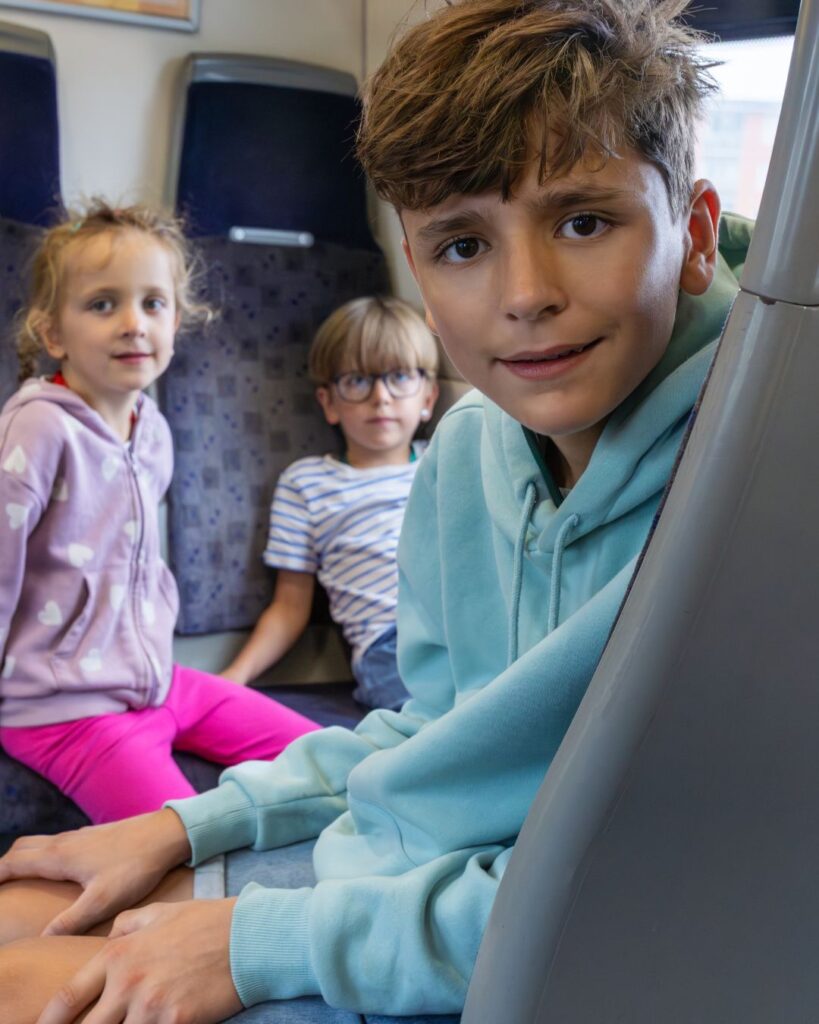
Train travel offers a unique opportunity to turn the journey itself into an experience. Encourage children to look out the window, spot landmarks, or track their route on a map. Sharing snacks, playing games, or simply chatting as the scenery rolls by can become some of the most memorable parts of the trip. Having a simple routine for longer journeys can also help. Perhaps starting with a snack or have you lunch on the train, followed by a game, and then some quiet time. Familiar patterns provide comfort, especially in unfamiliar environments.
Budget Beyond The Basics
While the Interrail Pass covers your train travel, it’s important to plan for additional costs. Seat reservations, local transport, meals, and attractions can all add up. Setting a daily budget helps keep spending in check and avoids surprises. It’s also worth noting that station food can be expensive, so picking up snacks or picnic items from local shops can save money and offer a more authentic experience. In most big cities, you can find supermarkets in train stations, where you can buy a picnic for the train. Especially if you are choosing a train that is 19 hours long.

Stay Flexible And Embrace The Unexpected
No matter how well you plan, things won’t always go perfectly. There have been times where things have gone wqrong and I have had to think on my feet! One time I had to be somewhere really quick, I went to get a 1-hour train, but got the wrong train, and it took nearly 3 hours. Now I always check the train number as well as the destination. But unexpected things are all part of the adventure. Trains might be delayed, plans may change, or you might stumble upon a place you want to stay longer. Building flexibility into your trip allows you to adapt without getting stressed. Travelling by train naturally encourages a slower, more flexible style of travel. Embrace it. Some of the best travel memories come from unplanned moments rather than perfectly executed itineraries.
A family Interrail trip is about more than just reaching destinations. It’s about the shared experience of getting there. With the right balance of planning and flexibility, it can be an exciting and surprisingly relaxing way to explore Europe together. If you ask Tilly, she would prefer rail travel over any other travel through Europe.
Take it slow, pack light, and leave room for discovery. The tracks will take care of the rest.