Making The Most of Shared Kids’ Bedrooms
Last Updated on: 21st May 2022, 10:33 pm
Having kids share a room can have benefits, but it’s also a situation that can lead to tension. Maximising the good things and finding solutions to any problems can be a challenge. So we’ve put together a few ideas that might help to make the most of shared kids’ bedrooms in your home
Expand the Floor Space
Whether it’s model railways, building blocks, jigsaw puzzles or playhouses. Kids need acres of floor space to spread out and let imaginations fly. There are various ways to make the most of play areas through storage and furnishings:
- Bunk beds – you’ll regain all the space one bed takes up. And kids do find bunks a bit of an adventure.
- Beds with storage – such as divans or ottoman styles with storage beneath the mattress. Having space here to put playthings or sports gear might mean you can free up some floor space. It means you will have fewer cabinets in the room.
- Shelves – shelving units or individual shelves running up the wall or around the room not only provide storage space. But they’re also easy to personalise either through the location or maybe a colour scheme.
If you’re considering making the switch from individual beds to bunks. Please bear in mind that kids might want single beds again when they grow up a bit. Saving your existing beds in self-storage helps future proof your options as children mature.
Create Boundaries with Symmetry
Kids have a strong sense of fairness and justice, and this extends to what they consider their personal space. When you’re making a comfy shared space for two or more children. Try and think of areas for each child and mirror the furnishings and layout. So, each child gets their own bedside table for instance, with space for personal objects.
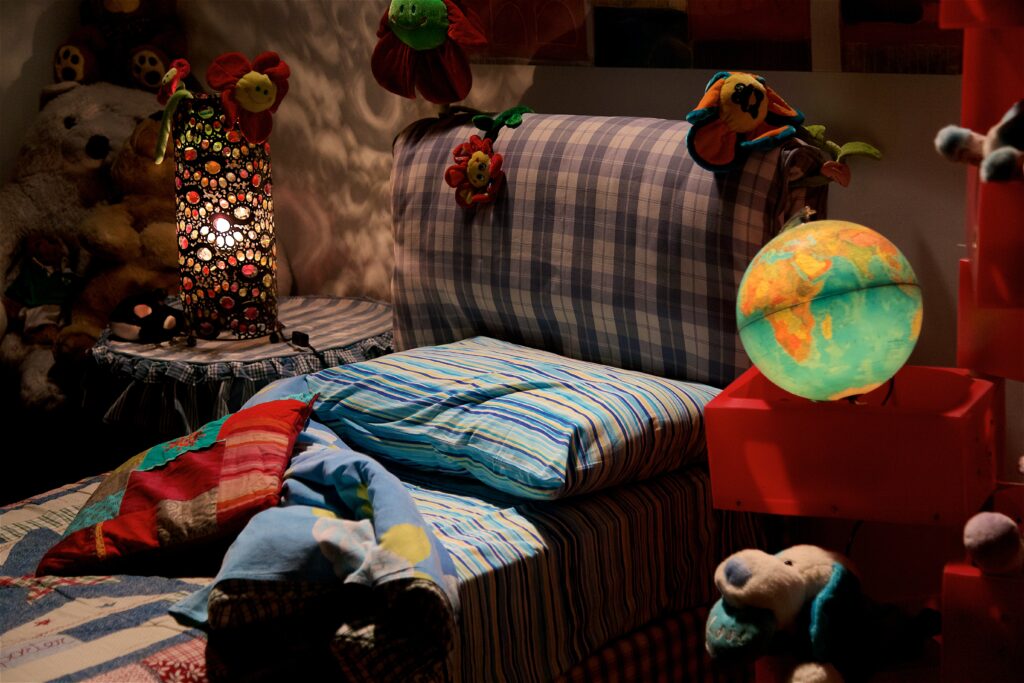
Where communal areas are unavoidable, for instance, if they’re sharing a wardrobe. Try and section off where each child puts their clothes. While it may not be possible to give everyone their own hanging rail. This can be done in the shared kids’ bedroom to let everyone have a shelf or a drawer.
Other ways to make personalised boundaries include colour. There’s no rule that says you can’t decorate a room in two different styles. Give each child their own wall, painted in their preferred colours where they can display favourite pictures or posters. Other ways to colour code areas in rooms are through bedding styles, special toy box colours or bedside rugs.
More Storage Ideas For Shared Kids’ Bedrooms
Hooks and hanging pegs for storage are available in lots of styles aimed at children. Personalise them with names or themes to create a defined, individual area for each child. Fitted below shelves they’re a handy way to make more wall space, leaving the floor free for playing.
If space allows, toy chests can hold a multitude of items. They also look good at the foot of a bed. And they double as a window seat for quiet moments watching the view.
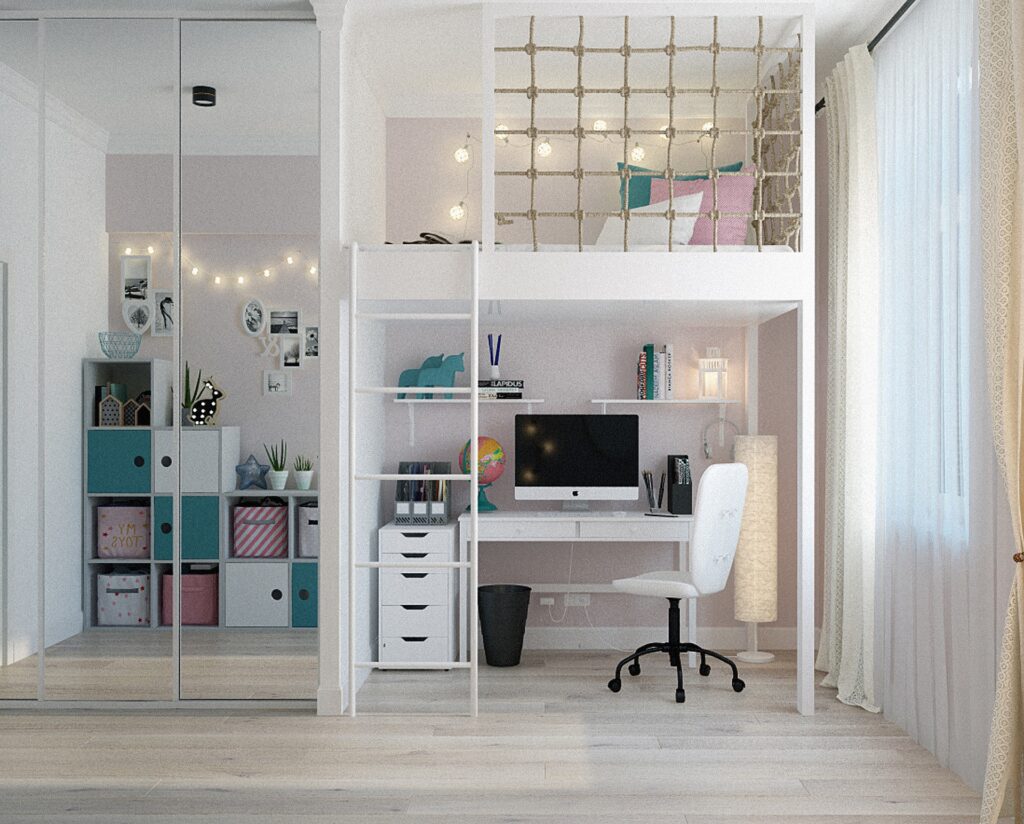
Use bookshelves as room dividers, to create shared reading nooks or to designate individual homework stations. They can run around corners or be placed over desks or beds (in the form of a couple of light shelves). Cube units can be arranged in various ways, again helping create their own personal space as well as defining boundaries.
Because shared kids bedrooms can quickly become overcrowded with possessions, make a point of having a regular clear-out. If larger toys are being left and not being played with. But taking up space, consider moving them into a self-storage unit rather than selling or giving them away. Chances are old favourites will be wanted again at some point, so it’s handy to be able to collect them. In the meantime, you’re creating more space in the room by not keeping items that aren’t needed. Plus, you get to have a personal treasure hunt every so often. It’s surprising how much you forget you own when you don’t see it every day.
You’ll never eliminate all sources of friction and argument but if you give each child a sense of personal ownership. A section of a room helps create a feeling of belonging. And also helps teach them respect for other people’s personal spaces.
Collaborated post