Reality Of Climate Change & Effects On The Planet
Last Updated on: 11th April 2021, 09:56 pm
Climate Change & Effects Of The Planet We Live On
Our planet already has a long period of existence and has undergone several changes. One of them, which the researchers consider one of the most drastic, is climate change. This has been affecting the world in many different ways, and it may be heading towards a point where our existence becomes increasingly difficult. We need to stop and take a look at climate change & effects it has on us and our children,
This climate change is caused by humans and their actions with the environment. And the act is that this change really happens and, in the long run, can have serious consequences for humanity. We are seeing the melting of polar caps, hurricanes and storms becoming more intense, floods happening around the world, forest fires, extreme droughts, and many other things.
Because of this concern for the future, several organizations and institutions are watching what is happening around the world in climatic terms. NASA is one of them. The agency has been monitoring thousands of places around the world with its space technology. Here we show some of these differences.
1 – Arctic sea ice cover
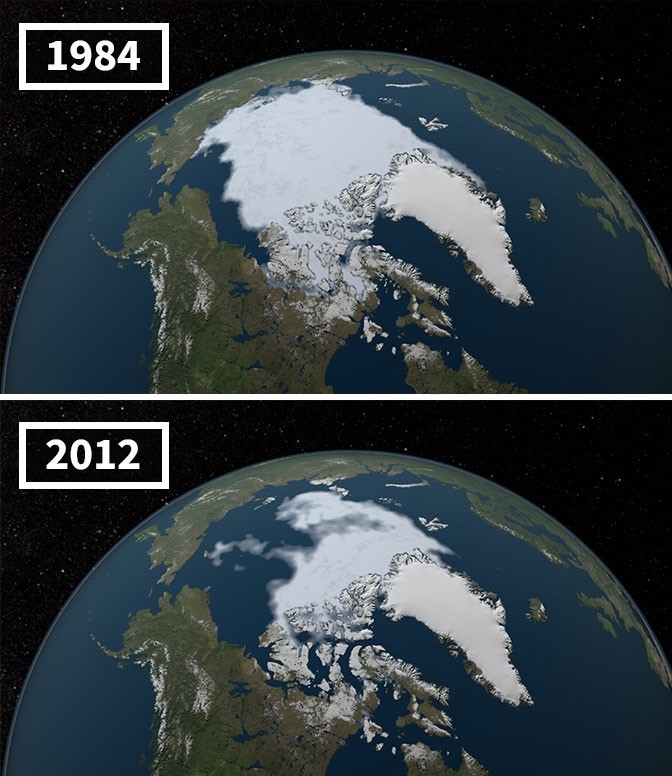
Generally, the Arctic Ocean area, covered with ice, increases in winter, and then shrinks in summer. And its lowest point is reached in September. But in 2012, minimum coverage set a low record since at least 1979.
The images compare the 1984 minimum with the 2012 minimum. In 2013, the minimum was higher. But the downward trend has continued in the long run at about 12% ice loss every decade since the late 1970s.
“At the rate at which we are seeing this decline, it is very likely that the Arctic summer sea ice will disappear completely within this century,” said NASA scientist Joey Comiso.
2 – Disappearance of the Aral Sea
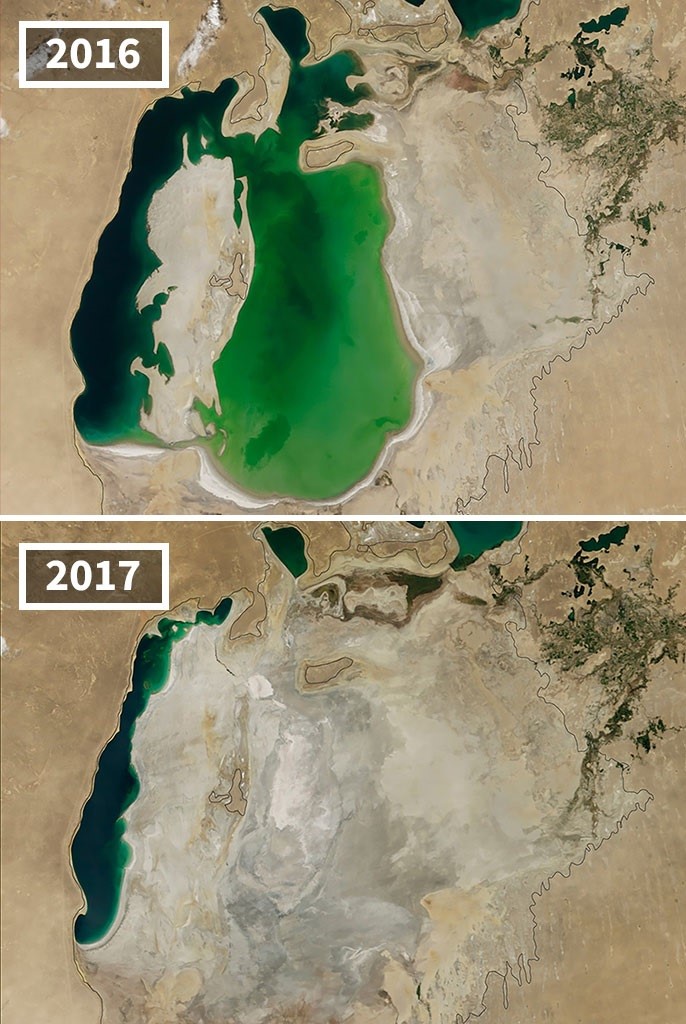
This sea was the fourth largest site in the world until the 1960s. The black outline showed the approximate coast of the side in 1960. And at the time of the newest image, in 2000, the North Sea of Aral had to separate from the Sea of South.
In 2005 a dam was built that helped the northern sea to recover much of the water level. But in 2014, the dry conditions caused the eastern side of the southern sea to dry out completely for the first time. And this loss of influence from a large body of water has left the winters colder and the summers hotter in the area.
3 – Melting of Muir Glaciers in Alaska
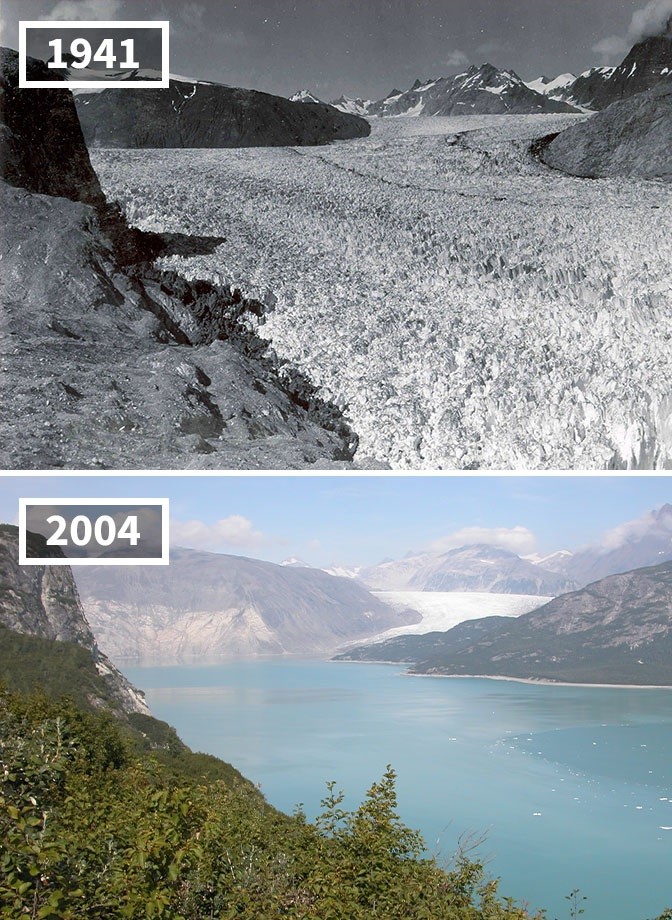
“The 1941 photograph shows the confines of the Muir Glacier and its tributary, the Riggs Glacier. In the 2004 photograph, the Muir Glacier, continuing to shrink, is located about 7 kilometres to the northwest, out of sight. Riggs Glacier retreated about 600 meters. Both glaciers have decreased substantially,” explained Comiso.
4 – Disappearance of Lake Poopó
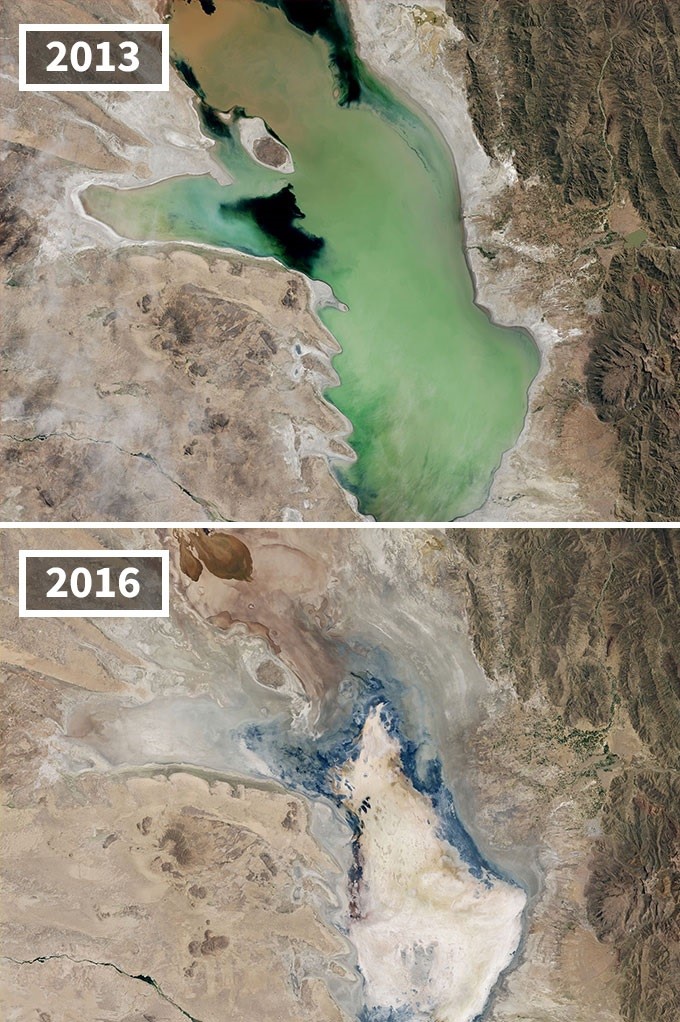
It is the second-largest lake in Bolivia and is an important resource for fishermen and local communities. It disappeared, again, due to drought and the diversion of water sources for mining and agriculture.
The lake last dried out in 1994. And after that, it took several years for the water to return. And even longer, for the ecosystem to recover.
5 – Rare snow falling in the Sahara desert
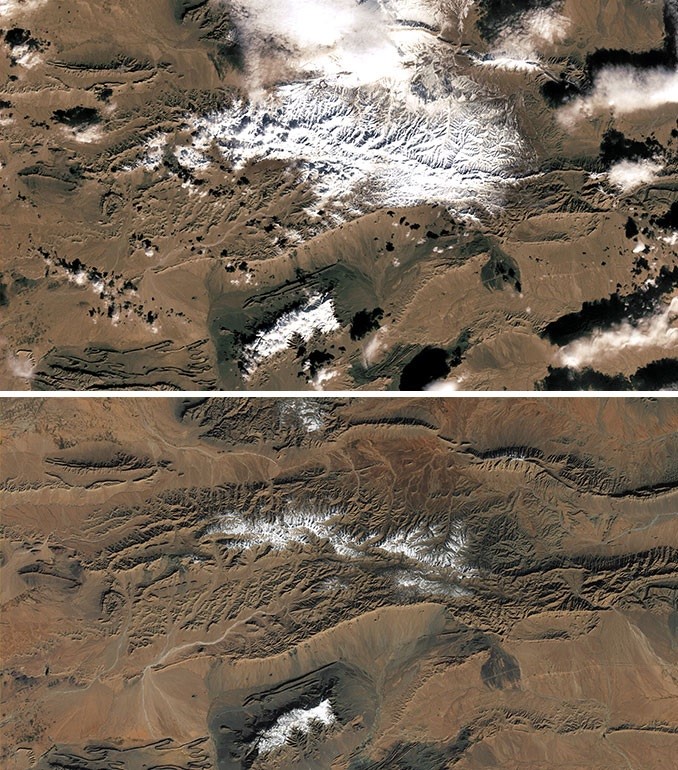
“It fell on the edge of the Sahara desert, in northwest Africa, in mid-December 2016, a rarity for the region. The Enhanced Thematic Mapper Plus (ETM +) sensor on the Landsat 7 satellite captured the whiteness of the top white photo over a caramel-coloured landscape southwest of the Algerian community Ain Sefra; a city sometimes referred to as the gateway to the desert. All snow has disappeared, except at the highest elevations, as shown in the right image captured by Landsat 8. Ain Sefra’s last snowfall occurred in February 1979, ″ said Comiso.